| Our Yacht | |
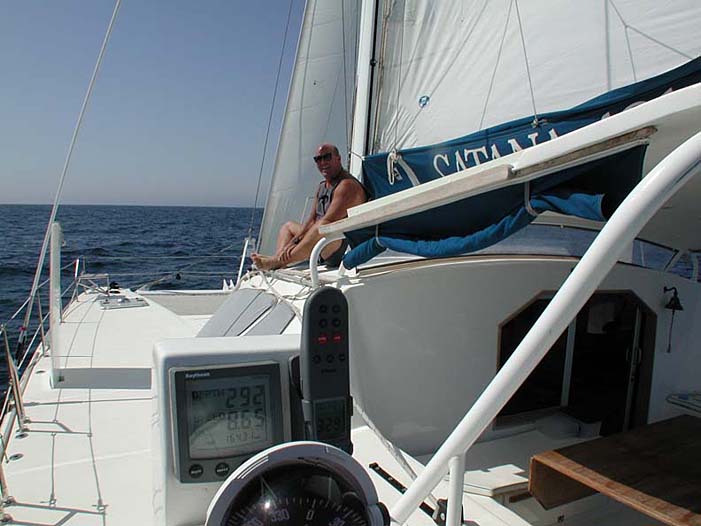
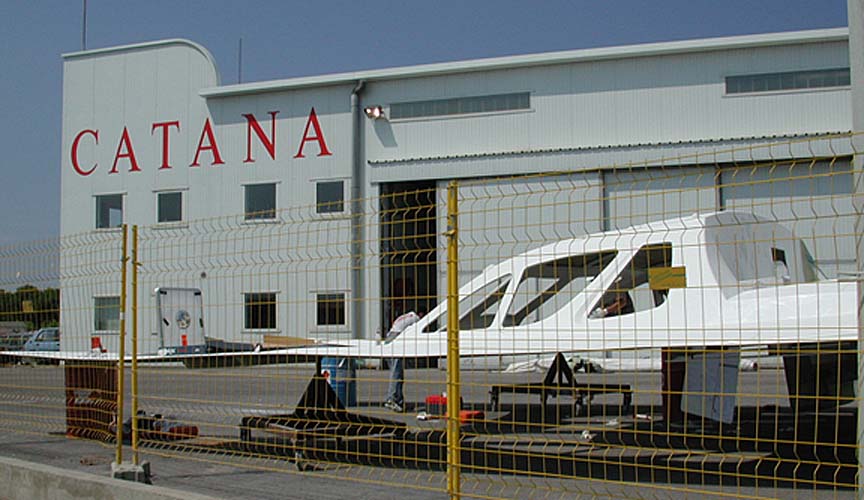
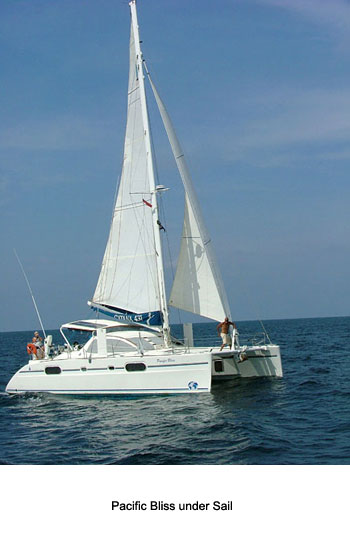
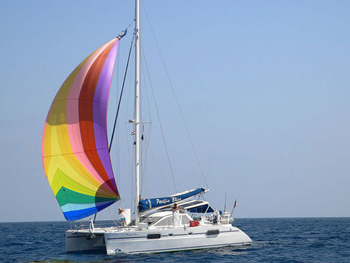
Pacific Bliss is a cruising catamaran semi-custom built for us by Catana, a yacht manufacturer located in Perpignan, France. The yacht is 43 feet long and 24 feet wide. It is built for comfort and has very little heeling or rolling. All lines go toward the cockpit for singlehanded control and easy tacking via electric winch. The catamaran configuration allows us to navigate in very shallow water and anchor close to beaches. It has an immense cockpit with easy access to the swim ladder and fresh water shower, and plenty of room on the trampoline for seclusion and sunning. In addition, the large cockpit table can be transformed into a sleeping area comfortable for those tropical nights with a cool ocean breeze. Inside, the CAT is spacious. It sleeps six easily, with two queen-sized berths and one double. The salon can sleep one person as well. Click here to see the layouts for the upper deck and the interior. Why we chose a Catana: For two years, we searched for the perfect yacht to circumnavigate the world. We chose the Catana for the following reasons: Safety: Catana is the "Rolls Royce" of Catamarans. This means that corners are not cut and safety is paramount. A Catana can overcome extreme conditions due to its seaworthiness and its ability to sail closehauled in difficult seas. One security factor is the shape of the hulls. Another is the daggerboards that can be raised in heavy weather, allowing the vessel to drift rather than raising the floater out of water. This should minimize the effect of strong gusts and heavy waves. Pacific Bliss is built with a number of structural bulkheads, allowing each section to float if damaged. It uses high performance materials with a Twaron Impact Process (Aramide/carbon/unidirectional). The yacht is therefore unsinkable, very strong, and yet lightweight. It has a ten-year structural guarantee. Stability: Retractable dagger boards allow a sideways sliding movement, avoiding the risk of raising the windward floater. In the case of an impact against a wreck, container or a reef, the dagger boards will break without damaging their casing or the hull structure. The crash-boxes formed by the watertight bulkheads fore and aft keep the living areas free of water in a collision. Even totally filled with water, the yacht will not sink. Performance: Since we are interested in cruising, not racing, speed is not the primary consideration, but what’s nice about the Catana is that she will hold a good, average speed, in spite of the wind or the weather. In gentle winds, we should be able to sail about 1/3 faster than in average monohulls.In following winds, the spinnaker allows us to go much faster than in an equivalent monohull. The dagger boards allow us to sail to weather During our entire circumnavigation, Pacific Bliss performed well, giving us a tremendous sense of confidence in her ability to withstand whatever nature could throw at her. She was even unfazed by a Force 10 storm off of Cartagena, Colombia. A follow-up check showed her rigging to be intact, with no adjustments needed. The following photos show various sections of the boat. |
 |
 |
|
 |
|
 |
|
| Interior Photos | |
| Salon Table Set for Six | |
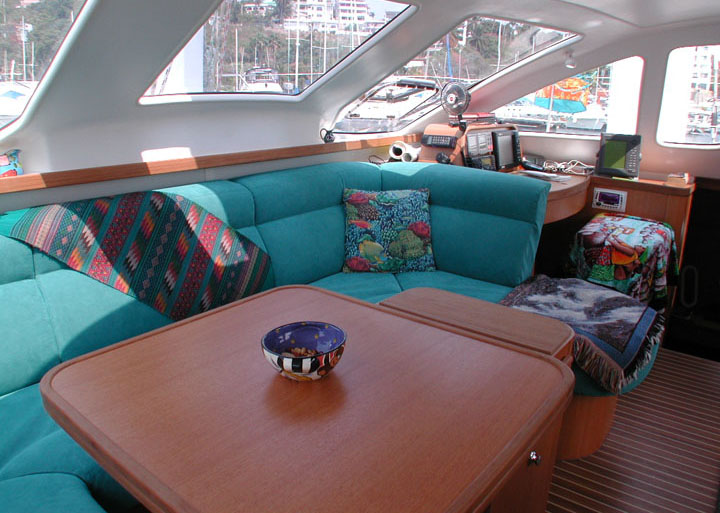
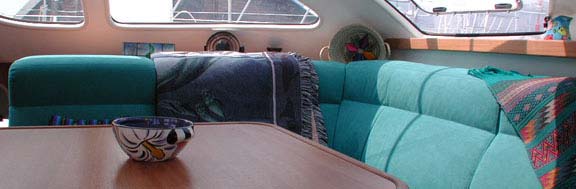
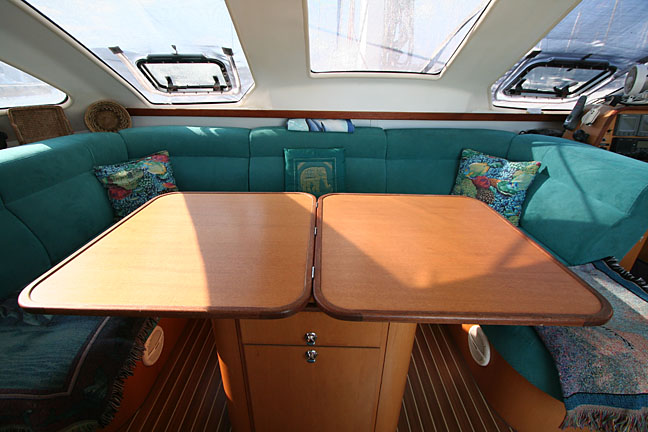
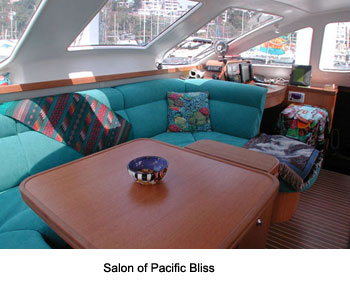
| Salon of Pacific Bliss | |
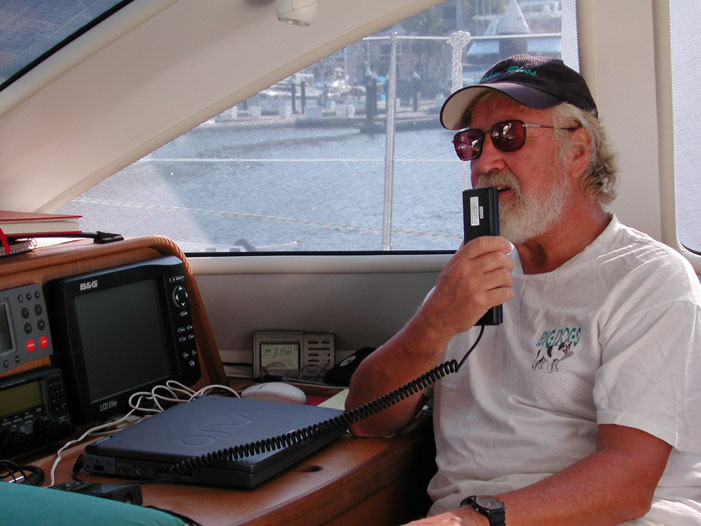
| Nav Station and Radio | |
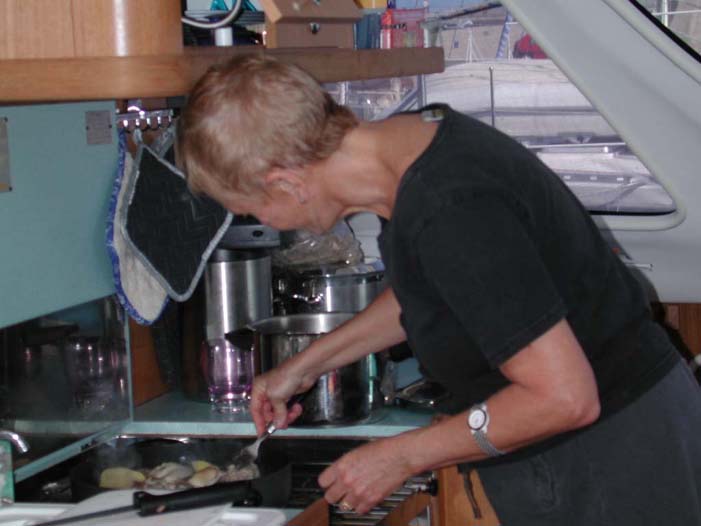
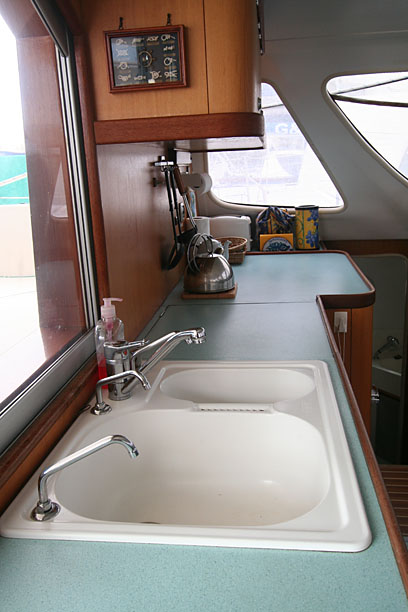
| Cooking on Board | |
| Settee and Table | |
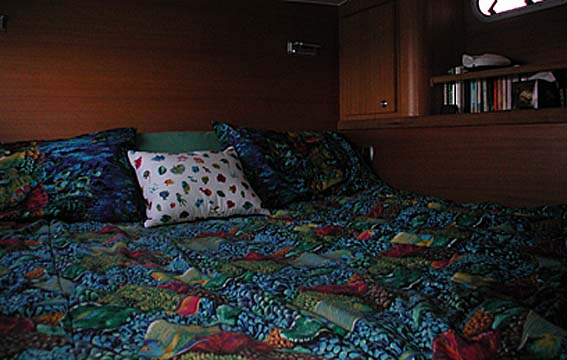
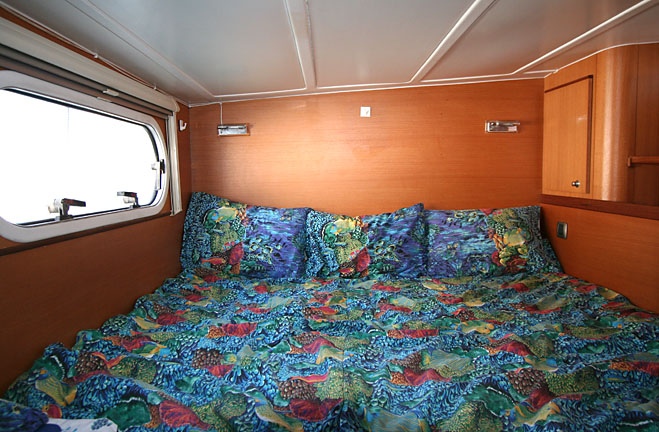
| Cabin, Master | |
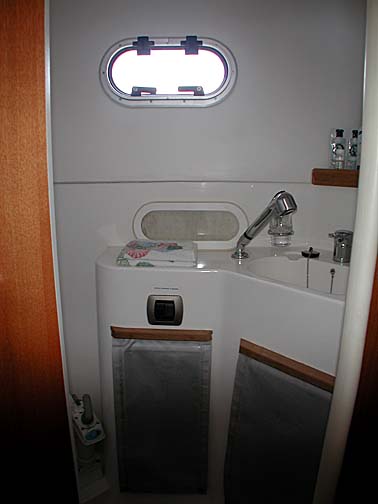
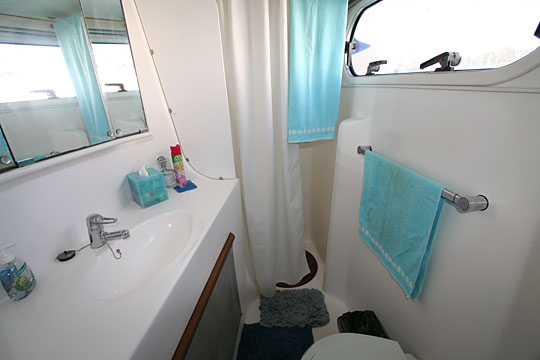
| Crew Head | |
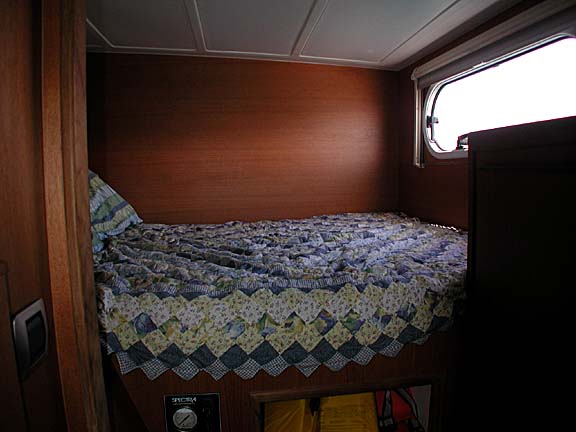
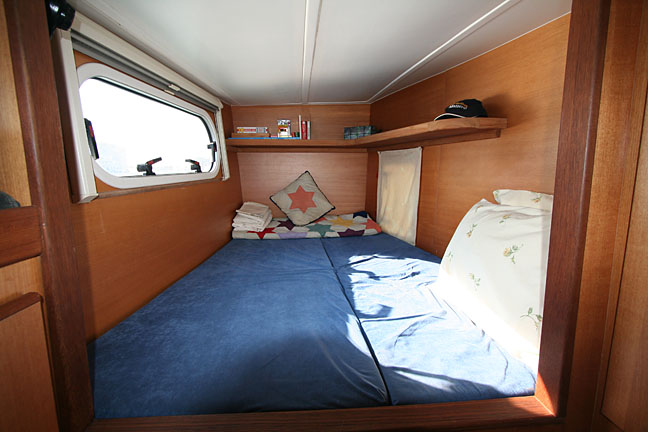
| Cabin, Crew | |
| Yacht Construction Photos | Exterior Photos |
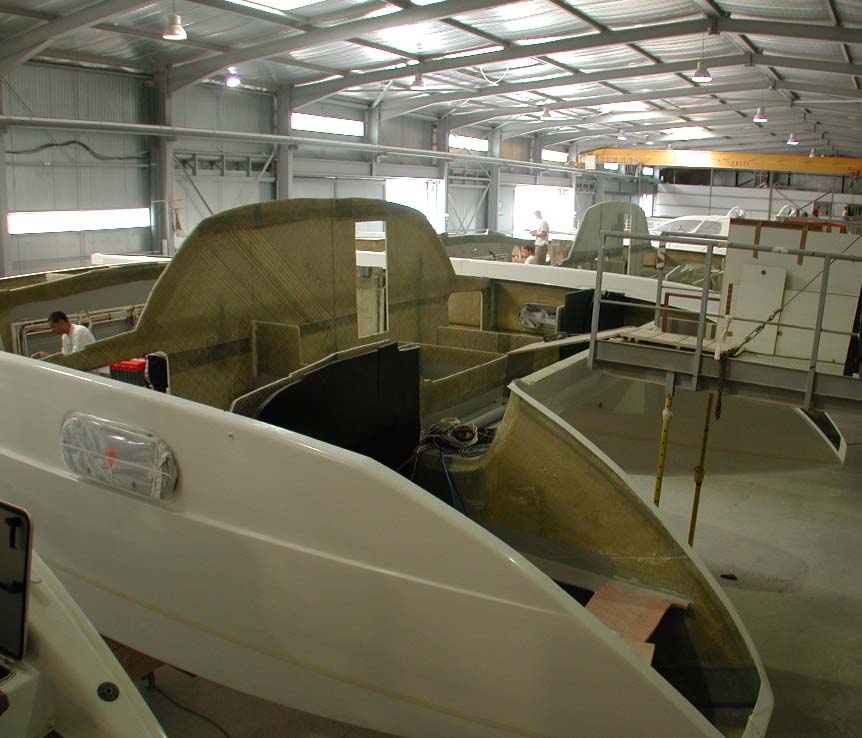
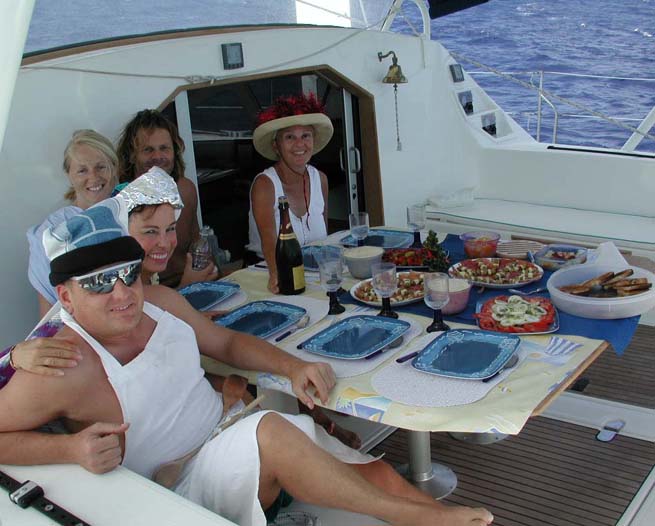
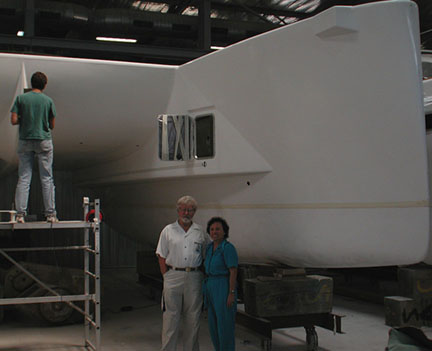
| Catana Manufacturing Plant | Cockpit Table (Atlantic Crossing, Half-way Masquerade) |
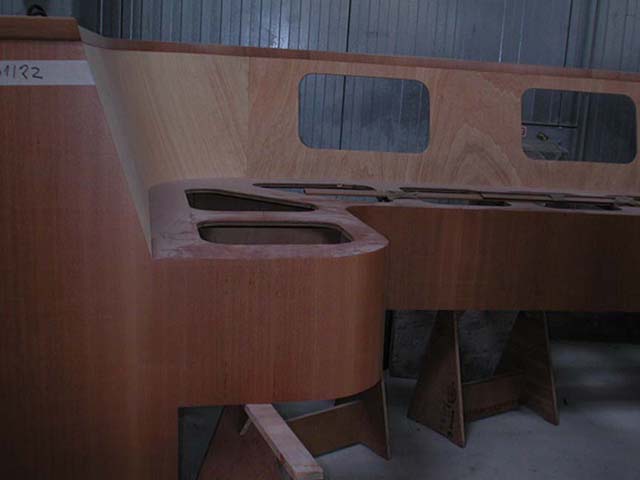
| Teak Settee Hull 22 | Mast and Port Pulpit Seat |
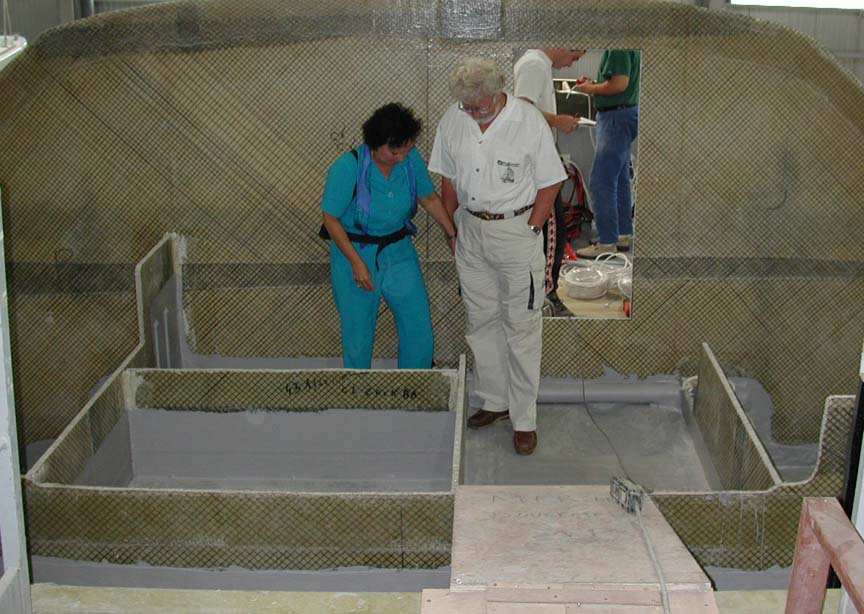
| Cockpit Area | Sunning under Full Sail (Baja) |
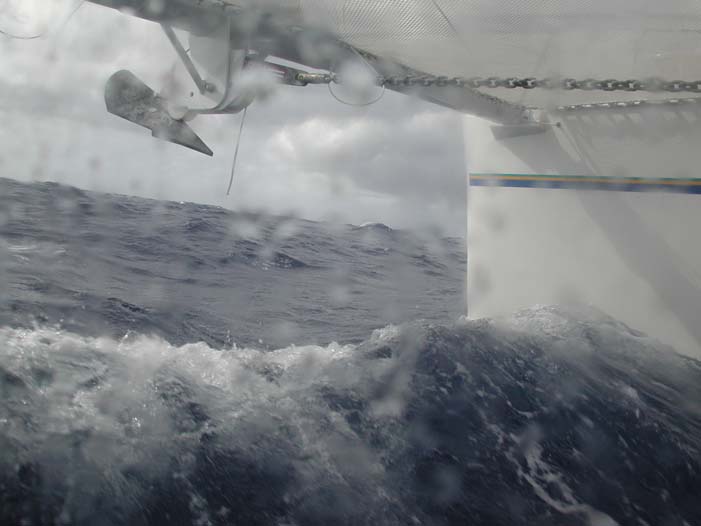
| Molded Deck Outside Catana | Anchor and Chain |
| Daggerboard Up (Marigot Bay, St. Lucia) | |
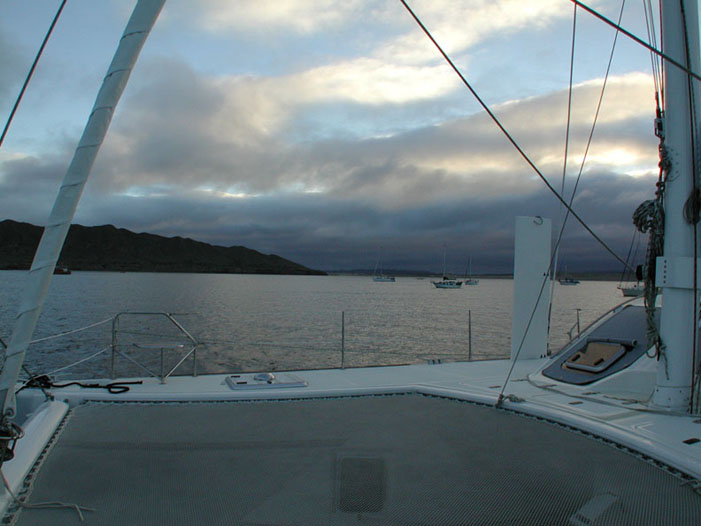
| Starboard Trampoline, Window Netting, Furled Jib | |
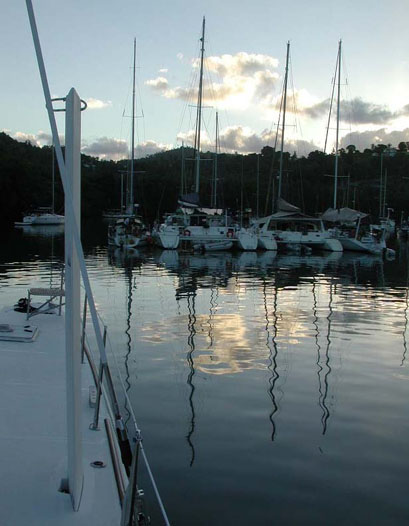
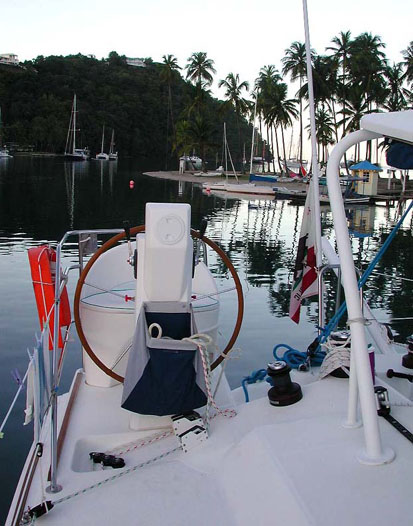
| Starboard Helm Station (Marigot Bay) | |
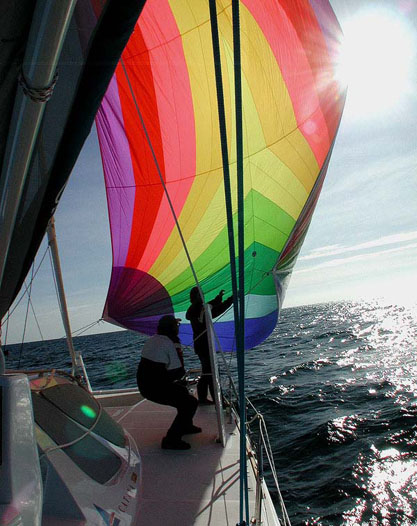
| Flying the Spinnaker | |
| Customized Features of Pacific Bliss | |
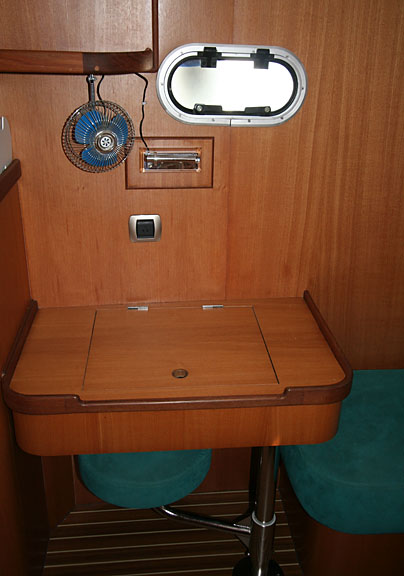
| Computer desk, shelf and swing-out stool | Owners head |
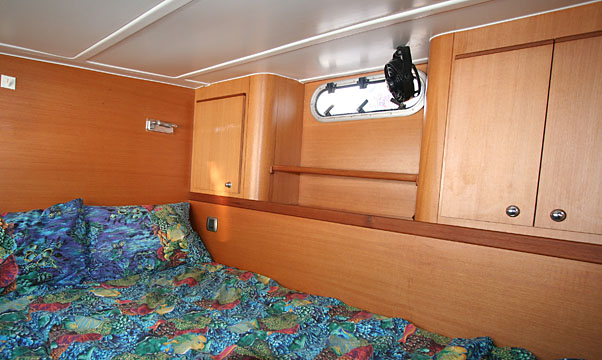
| Port fwd berth, shelving, escape hatch | Master berth and cabinets |
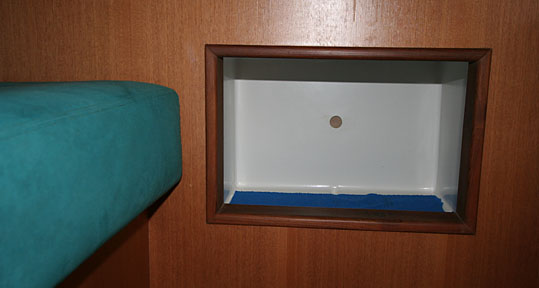
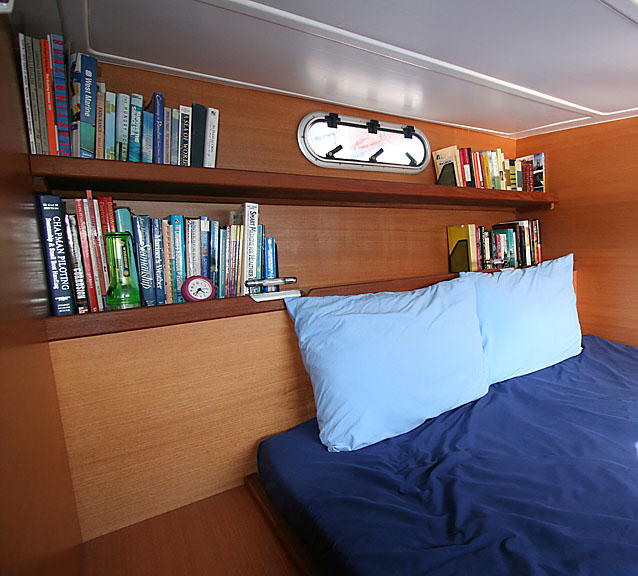
| Underbed shoe storage cut-out in all three berths | Sailing library and shelving in crew berths |
| Private lockers and bookshelves in owners hull | Fold-out pedestal table with silverware, glass and bar storage |
| Galley color-coordinated to match settee |